Sourdough Discard Focaccia
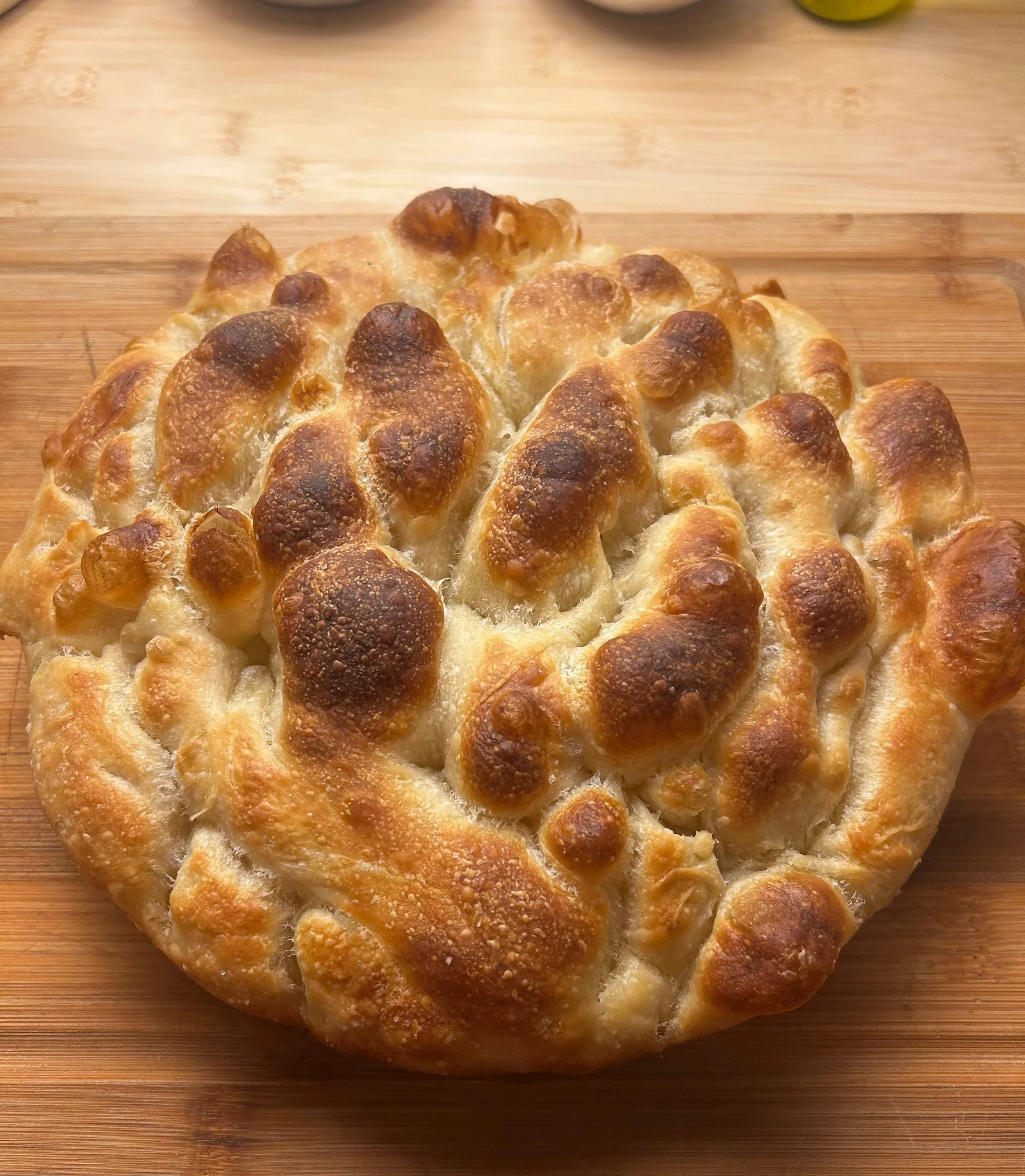
This focaccia is made entirely with sourdough discard straight from the fridge—no feeding and no added yeast. The long fermentation and intentional overproofing allow the discard to become active within the dough itself, producing incredible flavor and texture with minimal effort.(Cast-Iron Skillets or Baking Pans · No Feeding · No Commercial Yeast)
Sourdough Discard Focaccia
Cast-Iron Skillets or Baking Pans · No Feeding · No Commercial Yeast
This focaccia is made entirely with sourdough discard straight from the fridge—no feeding and no added
yeast. The long fermentation and intentional overproofing allow the discard to become active within the
dough itself, creating incredible flavor and texture with minimal effort.
Ingredients
• 4 cups (about 480 g) all-purpose flour
• 2 cups (480 g) water
• 100 g sourdough discard (unfed, straight from the fridge)
• 11 g salt (≈ 2 teaspoons fine sea salt)
• Olive oil, generously
• Flaky sea salt, for topping
Method
Day 1: Mix flour, water, sourdough discard, and salt until fully combined. Dough will be somewhat wet and sticky
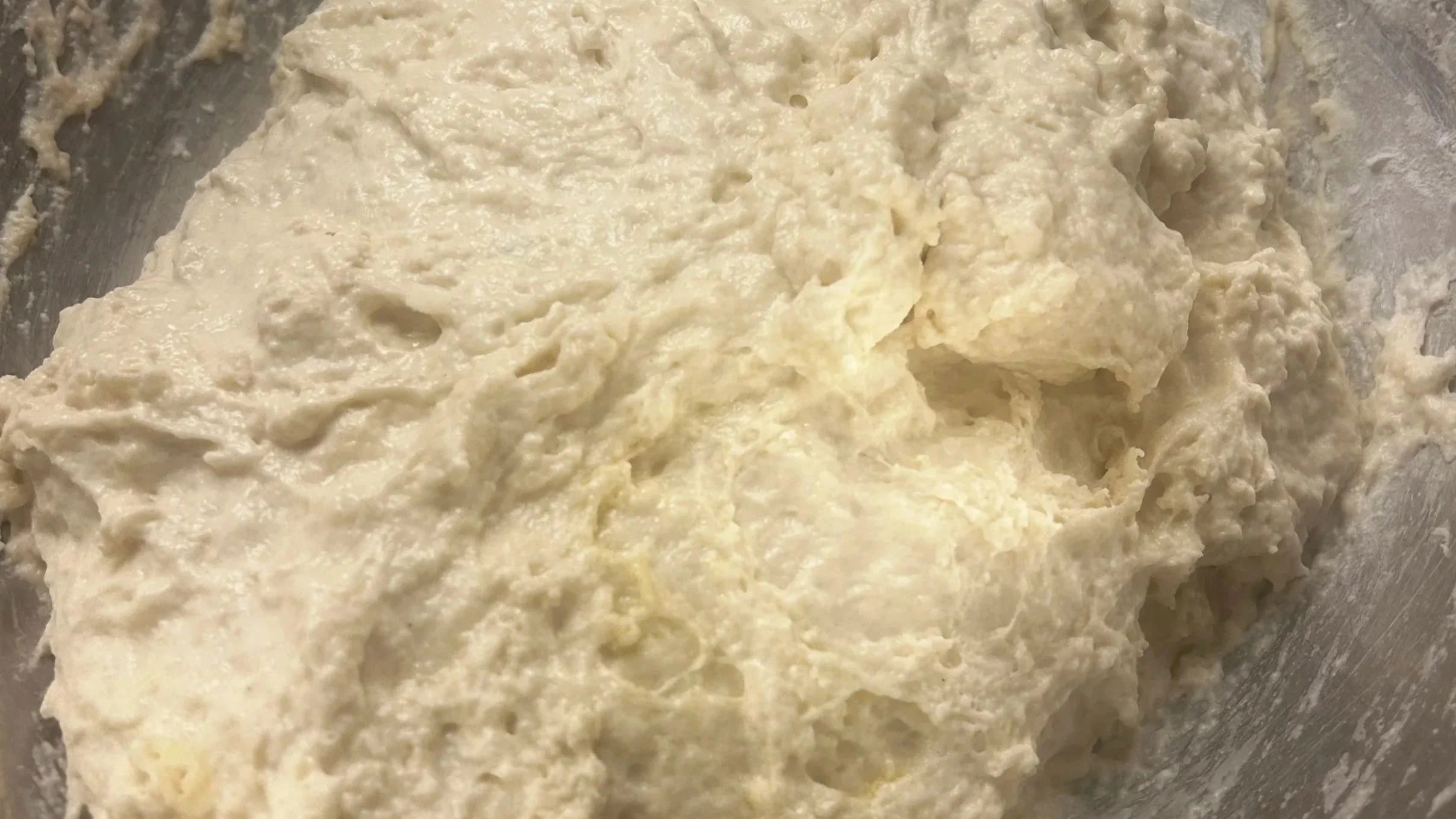
2 Rest 20–30 minutes.
3 Perform 2–3 rounds of stretch and folds, spaced 20–30 minutes apart, until the dough gains structure.
4 Cover and let rise at room temperature for about 3 hours, until slightly puffy and fermenting.
5 Refrigerate overnight.
Day 2: Divide dough between well-oiled cast-iron skillets or generously oiled baking pans.
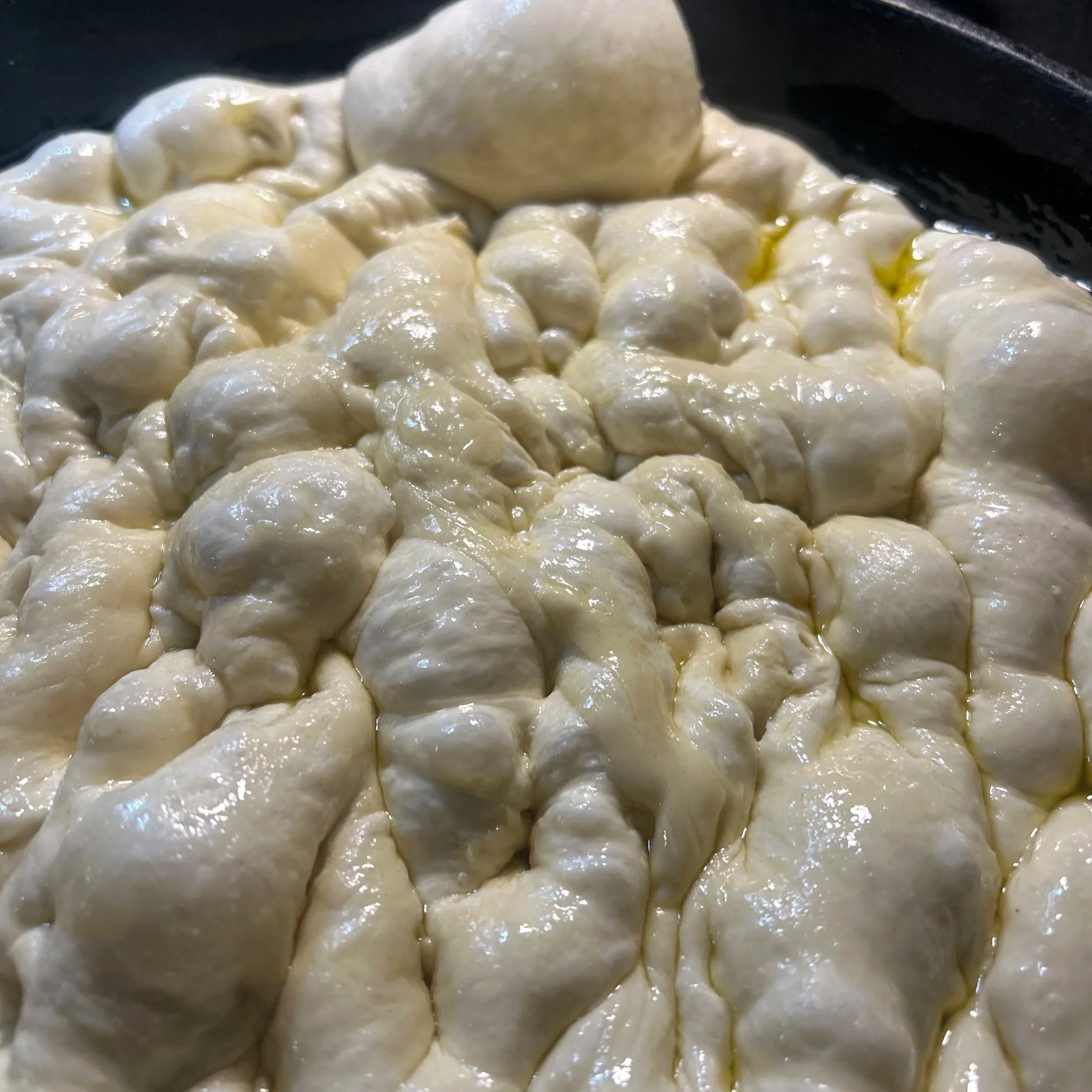
6 Drizzle with olive oil, cover, and let rise at room temperature for 4+ hours until very airy and jiggly.
7 Preheat oven to 425°F (220°C).
8 Dimple deeply with oiled fingers, drizzle with more olive oil, and sprinkle with flaky sea salt.
9 Bake 25–30 minutes, until deeply golden with crisp edges.
10 Cool slightly before removing from the pan and slicing.
Why This Works
Focaccia is meant to be overproofed. The extended fermentation gives unfed sourdough discard time to
fully activate within the dough itself—something that would not behave the same way in a structured
sourdough loaf. Cast iron promotes a crisp bottom crust, while baking pans produce a slightly softer base.
Simple is best: olive oil and flaky sea salt. Let the fermentation do the rest.
