Croissant-Style Focaccia
Recently, I baked a chocolate croissant sourdough loaf, and it sparked an idea: what would happen if I grated an entire stick of butter into my focaccia dough and folded it in?
Let me tell you… this was one of my most successful experiments yet.
Yes, we all know folding butter into basically anything makes it more indulgent, but this exceeded my expectations. The center had that flaky, buttery croissant vibe, while the outside stayed crunchy and golden like true focaccia.
An overwhelming success, if I do say so myself.
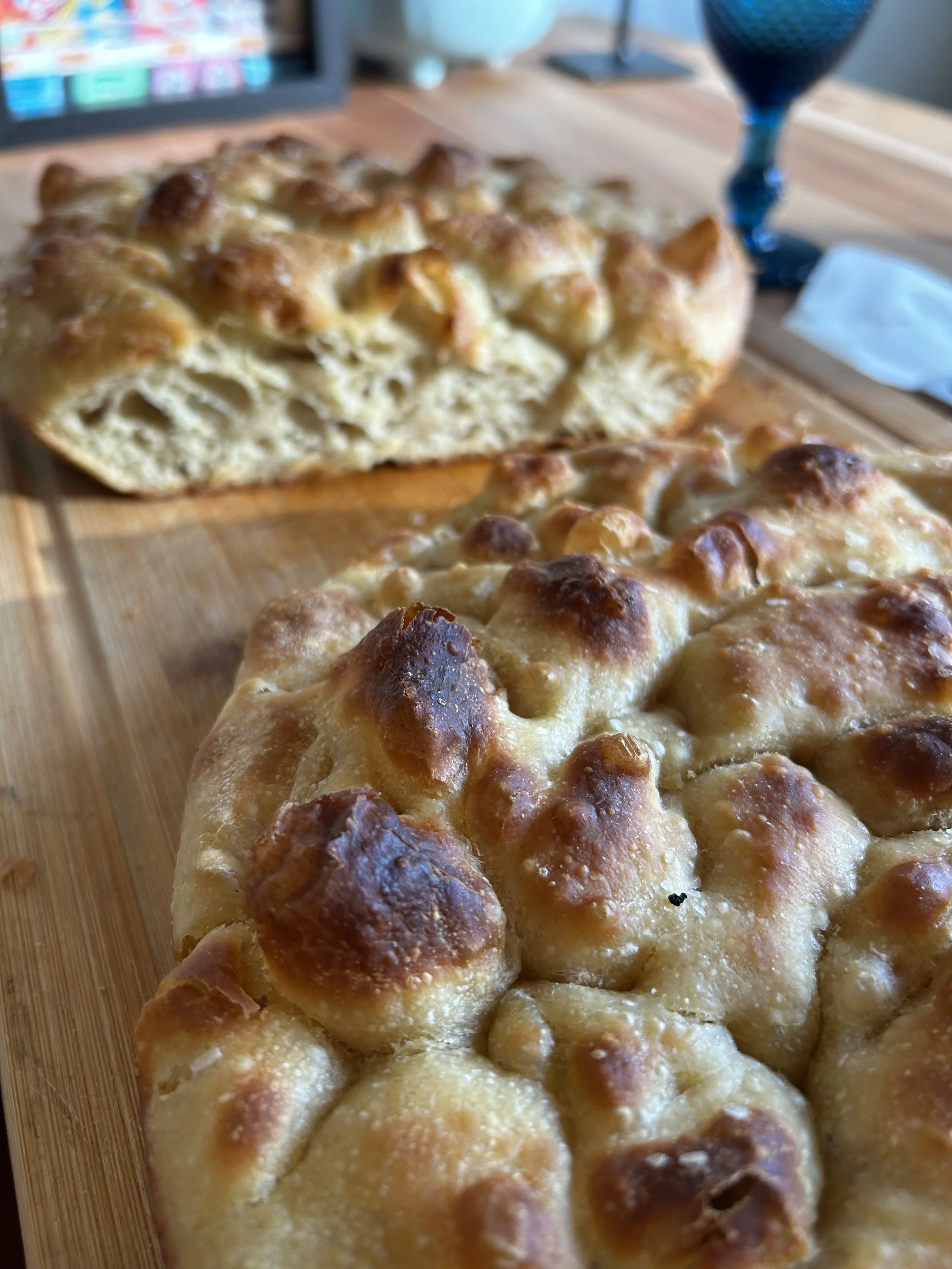
Croissant-Style Focaccia
This recipe was born from one of those “what if?” baking moments. After making a croissant-style sourdough loaf, I wondered what would happen if I grated an entire stick of cold butter into my focaccia dough and folded it in.
The result was wild in the best way: buttery, flaky layers in the center with that golden, crunchy focaccia exterior. Rich, indulgent, and absolutely worth the experiment.
Ingredients
Sourdough Version
500g bread flour
375g water
100g active sourdough starter
10g salt
20g olive oil
1 stick cold butter, grated
Olive oil, for the pan and topping
Flaky sea salt, for topping
Commercial Yeast Version
500g bread flour
390g water
7g instant yeast, or 1 packet
10g salt
20g olive oil
1 stick cold butter, grated
Olive oil, for the pan and topping
Flaky sea salt, for topping
Optional toppings: rosemary, garlic, herbs, extra butter, honey drizzle, or even a little sugar and cinnamon if you want to lean sweet.
Sourdough Method
1. Mix the dough
In a large bowl, combine the bread flour, water, and active sourdough starter. Mix until no dry flour remains.
Cover and let rest for 30 minutes.
Add the salt and olive oil, then mix until incorporated. The dough will be sticky and loose.
2. Stretch and fold
Over the next 2 hours, do 3 to 4 sets of stretch and folds, about 30 minutes apart.
Lift one side of the dough, fold it over itself, rotate the bowl, and repeat on all sides.
3. Add the grated butter
Grate one very cold stick of butter using the large holes of a box grater.
Sprinkle half of the butter over the dough and gently fold it in. Add the rest and fold again.
Do not fully mix the butter into the dough. You want little pockets and layers of butter.
4. Bulk ferment
Cover and let the dough rise at room temperature until puffy, airy, and noticeably risen. This usually takes about 4 to 6 hours total from mixing, depending on the temperature of your kitchen.
5. Cold proof
Transfer the dough to a generously oiled pan. Cover and refrigerate overnight.
6. Final rise
The next day, remove from the fridge and let it sit at room temperature for 2 to 4 hours, or until puffy and jiggly.
Drizzle generously with olive oil.
7. Dimple and bake
Gently dimple the dough with oiled fingers. Top with flaky sea salt and any other toppings you like.
Bake at 425°F for 25 to 35 minutes, or until deeply golden, crisp around the edges, and cooked through in the center.
Commercial Yeast Method
1. Mix the dough
In a large bowl, combine the bread flour, water, instant yeast, salt, and olive oil. Mix until a shaggy, sticky dough forms.
Cover and let rest for 20 to 30 minutes.
2. Stretch and fold
Do 3 sets of stretch and folds over about 1 to 1 ½ hours.
This helps build structure without kneading.
3. Add the grated butter
Grate one cold stick of butter using the large holes of a box grater.
Sprinkle half the butter over the dough and gently fold it in. Add the remaining butter and fold again.
The goal is not to blend the butter completely. You want buttery pockets throughout the dough.
4. First rise
Cover and let the dough rise at room temperature until doubled and bubbly, about 1 ½ to 2 ½ hours depending on your kitchen.
5. Pan and proof
Transfer the dough to a generously oiled pan. Gently stretch it toward the edges, but don’t force it.
Cover and let rise again for 45 minutes to 1 ½ hours, until puffy and jiggly.
For more flavor, you can also refrigerate the panned dough overnight, then bring it to room temperature before baking.
6. Dimple and bake
Drizzle with olive oil, then gently dimple the dough with oiled fingers.
Top with flaky sea salt and any toppings you love.
Bake at 425°F for 25 to 35 minutes, or until golden, crisp, and cooked through.
Notes
For the best results, keep the butter very cold before grating. You can even freeze it for 10 to 15 minutes first.
Do not overwork the dough after adding the butter. The magic is in the little butter pockets.
The sourdough version will have deeper flavor and a chewier texture. The commercial yeast version will be faster, fluffier, and still beautifully buttery.
Best served warm, but also very dangerous toasted the next day.
